For Insurers

Redefining Clinical and Financial Outcomes

Evidence-based and value-based programs deliver a clinical and financial solution for low back and neck pain.

Poor spinal muscle strength, endurance and strong fear-avoidant behavior after injury often lead to prolonged work restrictions, absenteeism and increased costs.

Addressing these underlying risk factors after injury is the cornerstone of the multidisciplinary approach used by Converge Medical Technology which includes:

  • Pelvic stabilization and lumbar isolation
  • Evidence-based approach
  • Successful patient outcomes
  • Improved low back and cervical strength
  • Increased flexibility and range of motion
  • Increased activity levels
  • Better sleep quality
  • Improved upper and lower body strength
  • Mindfulness and meditation activities

The Converge
Multidisciplinary Approach

multidisciplinary approach

Evidence-Based Care and Lumbar Isolation

Use of the MedX lumbar extension device is supported by over 75 research articles.

Research shows the MedX lumbar extension device effectively helps patients recover from injury by reconditioning atrophied low back muscles with isolated strengthening.

Most low back programs focus on core rehabilitation and not specific low back strengthening.

Without specific isolation of the lumbar muscles, atrophy is not reversed, and patients often fail to achieve desired results.

Pelvic stabilization and lumbar isolation directly impacts clinical effectiveness.

v shape
isolated low back strengthening

Pelvic stabilization targets the low back muscles

non isolated low back

Non-isolated low back strengthening engages the gluteal and hamstring muscles

erector multifudus

The erector spinae and multifidus muscles are the weak link between the upper and lower body when moving and are very susceptible to injury

Low Back Injuries are Costly

Patients who incur substantial medical and compensation costs often have spinal surgery that can range from $25,000 to $250,000 or more.

40% of adults have back pain

31% of adults have neck pain

Back and neck pain cost over $100 billion annually

Doctor visits, diagnostic tests, medication, physical therapy, chiropractic care, minimally, spine procedures, emergency room visits add up for patients who don’t get better

Each year 500,000 Americans have back surgery

Approximately 200,000 patients fail surgery

The average workers comp settlement for low back injuries ranges from $45,000 to $500,000 or more
MedX Prevents Surgeries

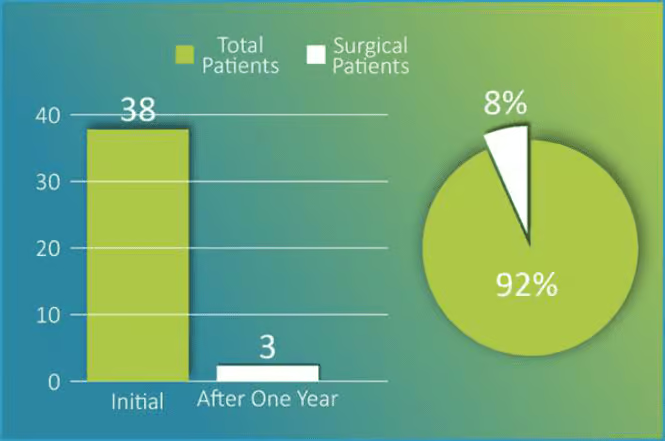
  • 38 patients were recommended for spinal surgery
  • Surgical procedures included fusion, discectomy, laminectomy
  • 35 patients avoided surgery (92%)
  • $3.4 million dollars was saved
Read More
pie chart

Faster Return to Work with MedX

patients graph

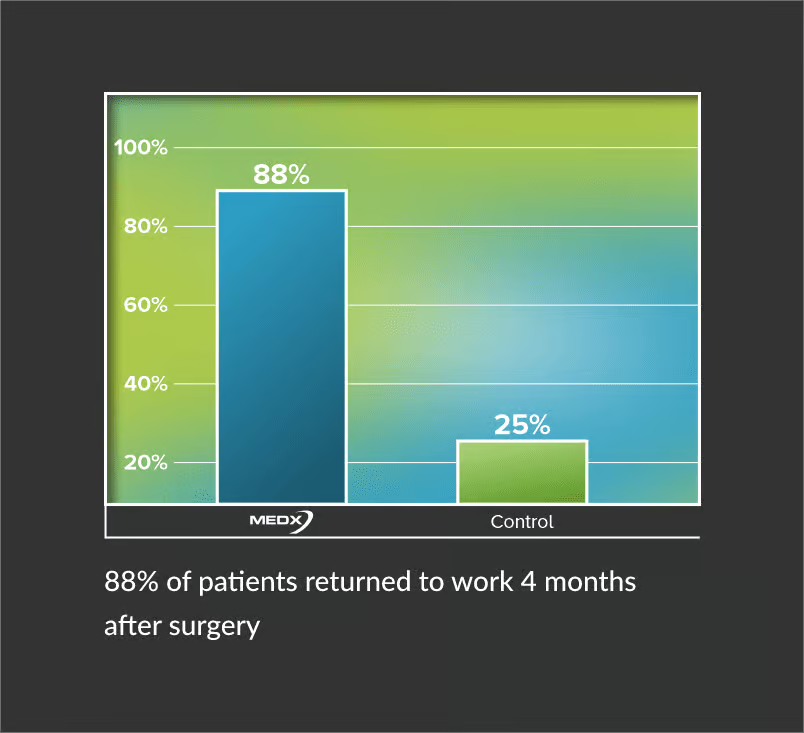
Patients using the MedX lumbar extension device have been shown to return to work 2 months faster than those not using the MedX device after lumbar disc surgery (four vs six months).

“The effect of early isolated lumbar extension for patients with herniated disc undergoing lumbar laminectomy.”

Read Article

“The clinical effects of intensive, specific rehab on chronic low back pain - a controlled study of 895 consecutive patients with 1-year follow up.”
Read Article
same graph

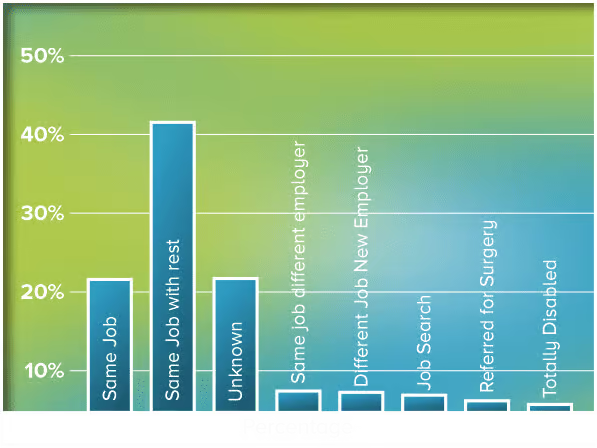
72% of patients returned to work after using the MedX lumbar extension device

Reduced Injury Risk with MedX

A weaker back is more likely to be injured, and the more times someone is injured, the greater the risk that a future injury will be more severe. Prolonged pain creates fear-avoidant behavior and significant atrophic changes in the lumbar spine that are detrimental and costly.

Research with the MedX lumbar extension device has been shown to reduce low back injuries and workers’ compensation liability.

Incidence of Low Back Injury (Coal Mining)

workers using medx

Average workers’ compensation liability dropped from $14,430 to $380 per month.

Patient Reported Outcomes (PROs): Change in Low Back Pain
(An Internal Quality Analysis)

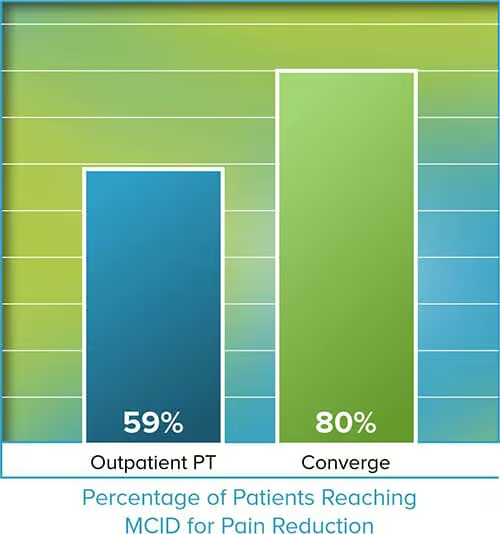
MCID is the minimally clinical important difference; the minimal threshold that a treatment must achieve to be clinically significant to a patient.
MCID Converge
  • Converge patients have a 3.2-point reduction in pain
  • A 2-point reduction in pain rating reaches MCID threshold
  • 80% of Converge patients met or exceeded MCID threshold
  • Patients decreased their pain by 40% on average
OPT Converge
  • 80% of Converge patients met or exceeded MCID threshold
  • Published research by Eleswarapu 2016 (n=3,000) shows that 59% of patients reach or exceed MCID for pain reduction from outpatient physical therapy
CMS Converge
  • 80% of Converge patients met or exceeded MCID threshold
  • U.S. Centers for Medicare & Medicaid Services (CMS), Merit-based Incentive Payment System (MIPS): 2023 Benchmarks show that 50% of patients reach or exceed MCID from their back pain treatments

Patient Reported Outcomes (PROs): Change in Low Back Disability
(An Internal Quality Analysis)

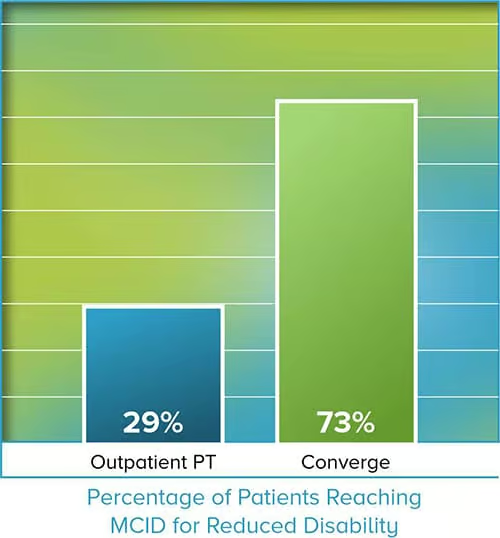
MCID is the minimally clinical important difference; the minimal threshold that a treatment must achieve to be clinically significant to a patient.
MCID Converge
  • Converge patients: 8-point reduction in disability
  • A 5-point reduction in disability reaches MCID threshold
  • Patients had a 54% improvement in disability on average
OPT Converge
  • 73% of Converge patients met or exceeded MCID threshold of disability
  • Published research by Eleswarapu 2016 (n=3,000) shows that 29% of patients reach or exceed MCID for an improvement in disability from outpatient physical therapy
CMS Converge
  • U.S. Centers for Medicare & Medicaid Services (CMS), Merit-based Incentive Payment System (MIPS): 2023 Benchmarks show that 54% of patients reached or exceeded MCID from their back pain treatments
  • 73% of Converge patients met or exceeded MCID threshold for disability

Patient Reported Outcomes (PROs): Low Back Strength and Range of Motion
(An Internal Quality Analysis)

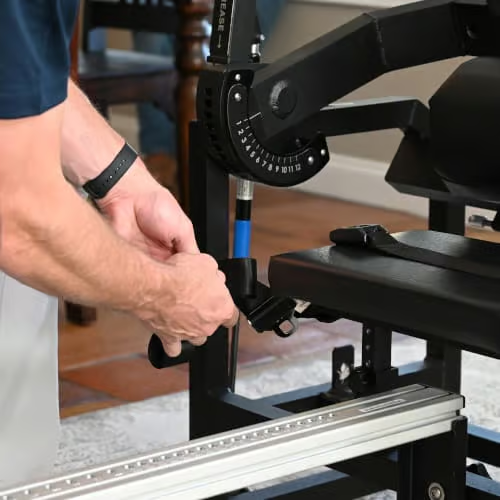
MedX setup
  • Low back range of motion is gradually increased
  • Patients increase their lumbar range of motion by 22 degrees
  • 103% improvement in flexibility on average
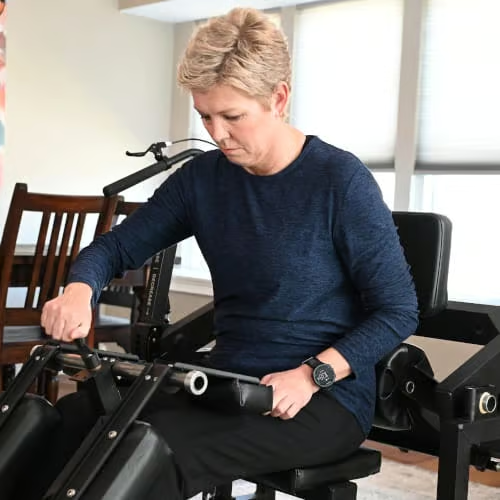
blue shirt woman
  • Patients gradually increase their low back strength
  • Low back strength is increased by 282% on average
normal mild
  • Reversing muscle atrophy drives clinical effectiveness
  • Pelvic stabilization and lumbar isolation drive strength and functional improvement
  • Improved strength and ROM are correlated with pain and disability relief

Empowering Movement, Changing Lives

We are an integral part of the journey back to health for people from all walks of life.

Latest News

linkedin facebook pinterest youtube rss twitter instagram facebook-blank rss-blank linkedin-blank pinterest youtube twitter instagram