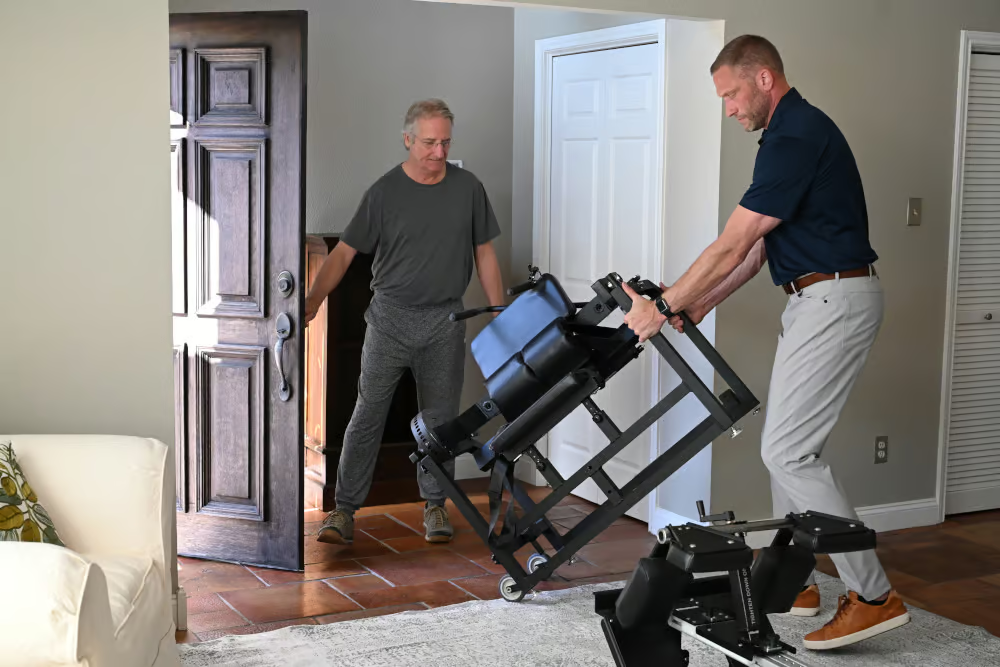
October is National Physical Therapy Month, a chance to recognize how much physical therapy does for people recovering from injury, surgery or chronic pain. For patients living with low back pain, physical therapy is often the first step toward relief. But for some patients, especially those with chronic symptoms lasting several months or longer, therapy alone does not always resolve the deeper problem.
In many cases, isolating the deep spinal support muscles using the at-home MedX device can be an excellent complement to physical therapy exercises that target mobility and flexibility.
What Physical Therapy Does Well
Physical therapists are trained to evaluate movement, posture and function as a whole. A typical course of therapy improves flexibility, corrects movement patterns and builds general strength and endurance. For many patients with low back pain, this can help to reduce symptoms. Physical therapy also teaches body mechanics and home exercise habits that protect the spine well after treatment ends.
Where Some Patients Still Struggle
The challenge is that the deep spinal stabilizing muscles, particularly the multifidus and erector spinae, are notoriously hard to isolate with conventional exercise. Because the hips and legs tend to take over during most strengthening movements, these deep muscles can remain weak even after months of consistent therapy. This is often why pain returns, or never fully goes away, even for those who followed through with physical therapy.
While some people notice temporary improvement during therapy that fades once sessions end, others still experience day-to-day pain. Both patterns often point back to the same underlying issue: deep spinal muscles that were never truly retrained.
How MedX Fits Alongside Physical Therapy
This is where MedX comes in. The at-home lumbar extension device stabilizes the pelvis so that the low back muscles can be tested and strengthened in isolation, without the hips or legs compensating. It is backed by more than 75 peer reviewed studies and is recommended by the Official Disability Guidelines as a first line treatment option after back injury. Many patients begin MedX after completing physical therapy, using it to target the specific muscle weakness that general rehabilitation could not reach on its own.
A Team Approach to Long-Term Relief
The most effective back pain plans usually combine more than one approach. Physical therapy addresses mobility, mechanics and overall conditioning, while MedX adds precise, measurable strengthening of the muscles that support the spine day to day, with progress tracked over time. Used together, these modalities can often give patients a more complete path to lasting relief.
This National Physical Therapy Month is a good reminder that recovery is rarely a single step. If low back pain has persisted despite completing physical therapy, it may be worth asking your doctor whether an at-home strengthening program like MedX could help.
To learn more about how MedX works alongside physical therapy, contact Converge Medical Technology or call 800-765-8643 to speak with a member of the team.