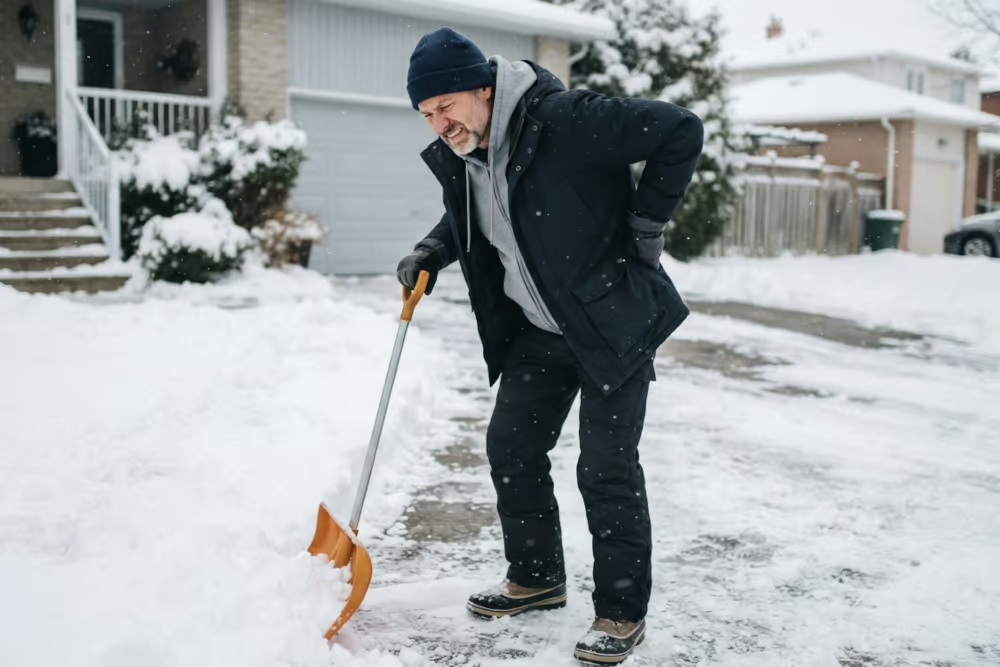
The first snowfall of the season can be beautiful, but for many Americans it also means the first round of shoveling. Clearing a driveway or sidewalk looks like a routine chore, yet it’s one of the most physically demanding tasks many people take on all year. If you already live with low back pain, one morning with a shovel can set you back for weeks. Here’s what the research says about shoveling injuries and how to protect your spine before winter arrives.
Why Shoveling Is So Hard on Your Back
A national study published in The American Journal of Emergency Medicine found that about 11,500 people are treated in U.S. emergency departments each year for snow shoveling-related injuries and medical emergencies. The lower back was the injured area in about a third of those cases, and overexertion was the most common cause.
It isn’t hard to see why. Shoveling combines repeated forward bending, lifting heavy loads and twisting to toss snow aside. Wet snow can be surprisingly heavy. Many people also try to finish the job quickly in the cold, before their muscles have had a chance to warm up.
Tips for Safer Shoveling
- Warm up first. Spend a few minutes walking or marching in place before you start.
- Push, don’t lift. Whenever possible, push snow to the side rather than lifting it.
- Lift with your legs. When you do need to lift, bend at your knees and hips, keep your back straight and hold the shovel close to your body.
- Pivot instead of twisting. Turn your whole body to face where you’re tossing the snow.
- Take small scoops and frequent breaks. Lighter loads and short rests reduce strain on your back.
- Know your limits. Shoveling is strenuous work for your heart as well as your back. If you have a heart condition or other health concerns, talk with your doctor before you pick up a shovel.
Why Weak Back Muscles Raise Your Risk
Good technique helps, but it can’t make up for weak muscles. Most low back injuries result from overexertion of the soft tissues in the lumbar spine. When the deep low back muscles are weak and deconditioned, they protect your spine less well. As we explained in How Are Weak Muscles Related to Low Back Pain?, this weakness often gets worse over time as people with back pain avoid movement.
Building Strength Before the Snow Flies
The MedX lumbar extension device stabilizes the pelvis and isolates the low back muscles, so they are the only muscle group working during each movement. MedX has been shown to reverse the low back muscle weakness that prolongs pain and disability after injury, and more than 75 peer-reviewed studies have been published on it. Because MedX is used in your home, you can build strength on your own schedule, even when icy roads make getting to a clinic difficult.
Is MedX Right for You?
If winter chores leave your back aching, or you’re still recovering from a past shoveling injury, talk with your doctor about whether MedX could help. Contact Converge Medical Technology or call 800-765-8643 to learn more about bringing MedX into your home.